What You Actually See From New York Harbor, and When
Every sailing on this harbor gets a clear view of the Statue of Liberty. Almost none of them go around it. Those two sentences settle most of the arguments people have after booking.
 By Olivia Bennett, NYC dinner cruise specialist & harbor experience guide
Short answer
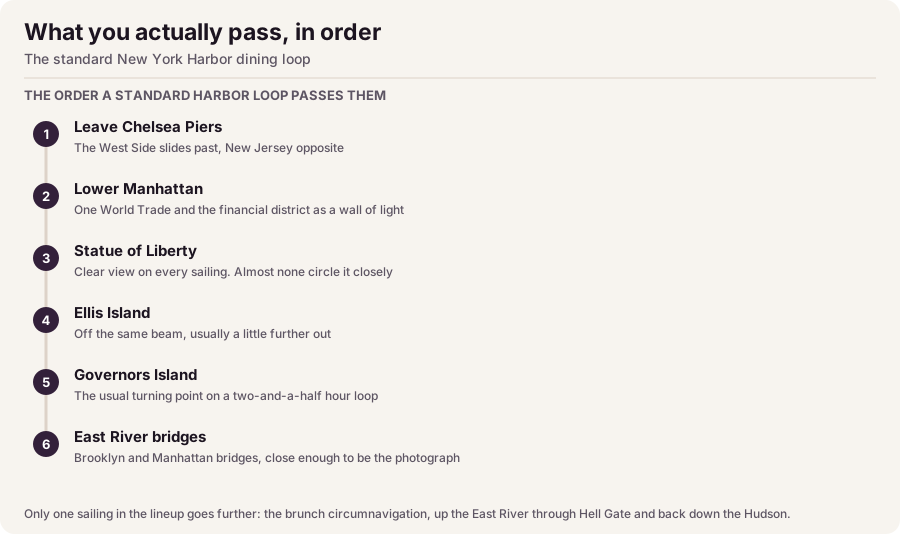
A standard harbor loop runs south down the Hudson past Lower Manhattan, into the Upper Bay for Ellis Island and the Statue of Liberty, past Governors Island, then into the East River under the Brooklyn and Manhattan Bridges before turning back. Only one sailing circles the whole island.
The most common complaint about a New York harbor sailing is not the food. It is that someone expected to sail around the Statue of Liberty and instead watched it slide past off the starboard rail at a distance, once, for about four minutes. That is not a failure of the boat. It is exactly what these products do, and it is stated plainly enough on the listings that nobody should be surprised by it. Rounding Liberty Island closely is a dedicated sightseeing trip, not something a three-hour dinner cruise builds into its route.
What these sailings do instead is genuinely better for anyone who came for the city rather than for one statue. A standard loop puts you inside the skyline looking up at it, then out on open water looking back at it, then under two of the most photographed bridges in the world. The sequence matters, the timing matters more, and almost nobody plans for either.
What do you actually see on a standard harbor loop?
A standard loop from Chelsea Piers runs south down the Hudson past the West Side and Lower Manhattan, out into the Upper Bay for Ellis Island and the Statue of Liberty, past Governors Island, then into the East River for the Brooklyn and Manhattan Bridges before turning and returning. Exact routes vary by operator and sailing length.
The shape is consistent across the operators that berth in Chelsea, and it is worth understanding as a sequence rather than a list, because the order determines when you should be outside. The first twenty minutes are the least interesting and the last twenty minutes are a repeat. The middle is where the sailing happens.
| Stage | What is off the rail | Why it matters |
|---|---|---|
| Leaving Chelsea Piers | West Side piers, Hudson River Park frontage | Warm-up, the skyline is behind and above you |
| Heading south on the Hudson | Midtown towers receding, the West Village waterfront | Best angle back up at the Midtown cluster |
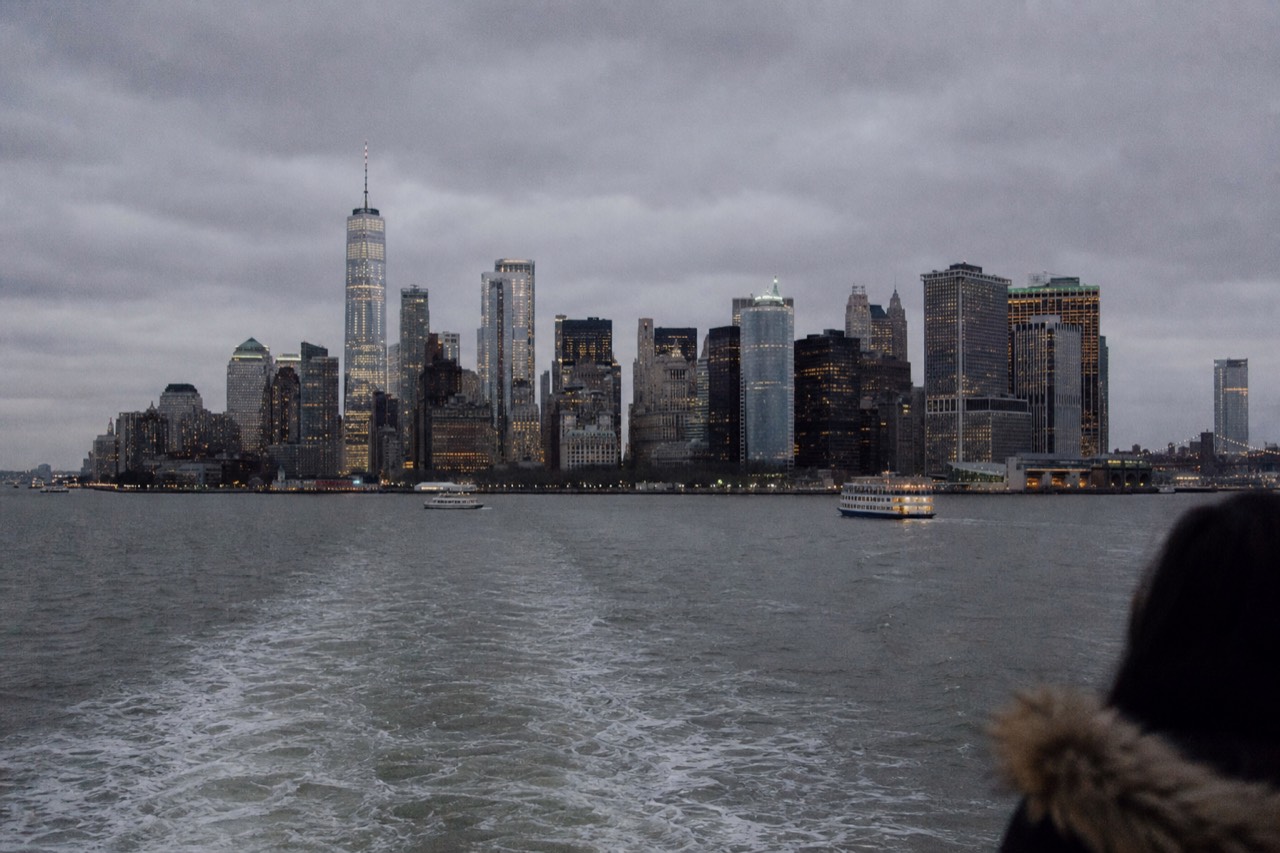
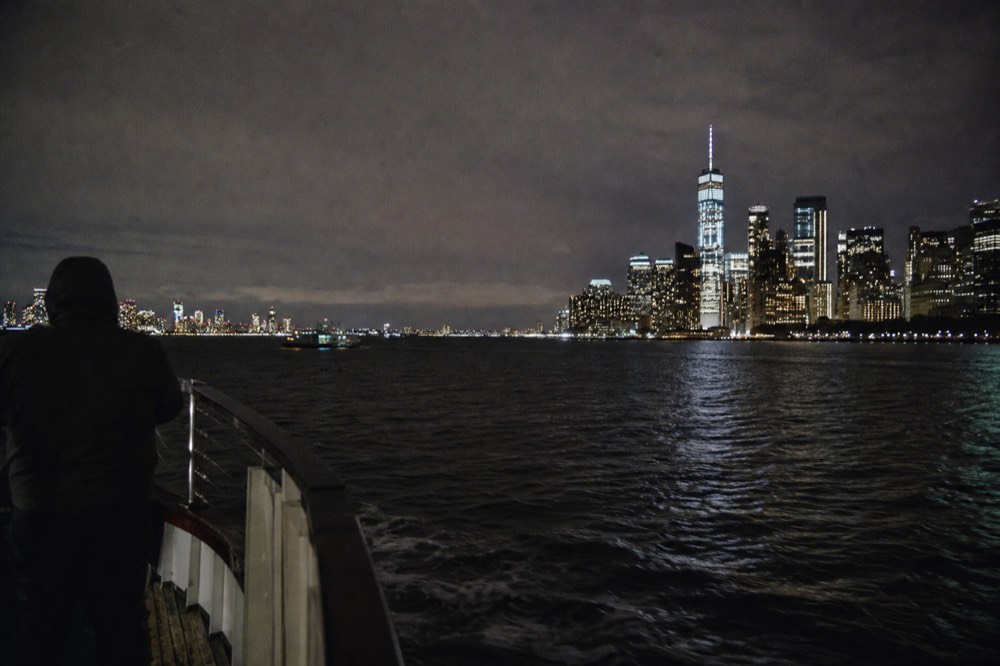
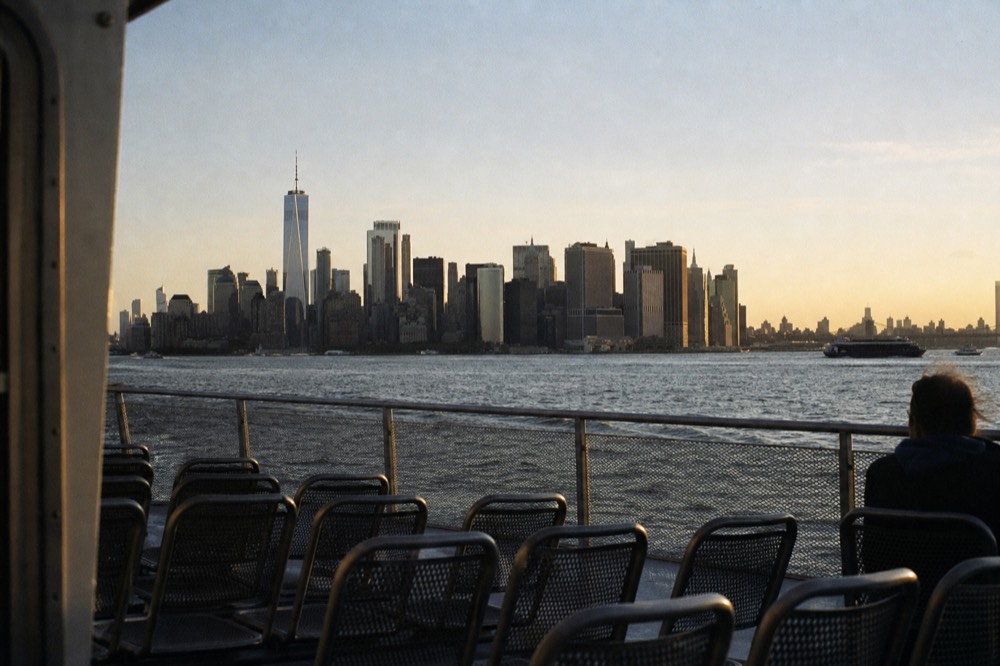
| Off Lower Manhattan | One World Trade and the financial district cluster | The densest vertical view of the trip |
| Upper Bay | Ellis Island, Statue of Liberty, open water | The only stretch with real distance from the city |
| Governors Island | Low green island between Manhattan and Brooklyn | The pivot point between rivers |
| East River approach | Brooklyn Bridge, then Manhattan Bridge | The two bridge shots everyone wants |
| Return leg | The same water in the opposite direction | Different light, same landmarks |
Three landmarks are named consistently by the operators as visible from these loops: the Manhattan skyline including the Empire State Building and One World Trade, the Brooklyn and Manhattan Bridges, and Governors Island, with the Statue of Liberty and Ellis Island seen from the bay. City Cruises describes the shape of its evening run on its own skyline cruise page.
The practical takeaway is about where to be standing. If you sit down for a first course as the boat leaves Chelsea Piers and stay seated, you will eat through the Lower Manhattan stretch and the bay, and reach the deck somewhere around the return leg. The people who come back raving about the view are the ones who worked out the sequence in advance and timed their courses around it.
Does every sailing pass the Statue of Liberty?
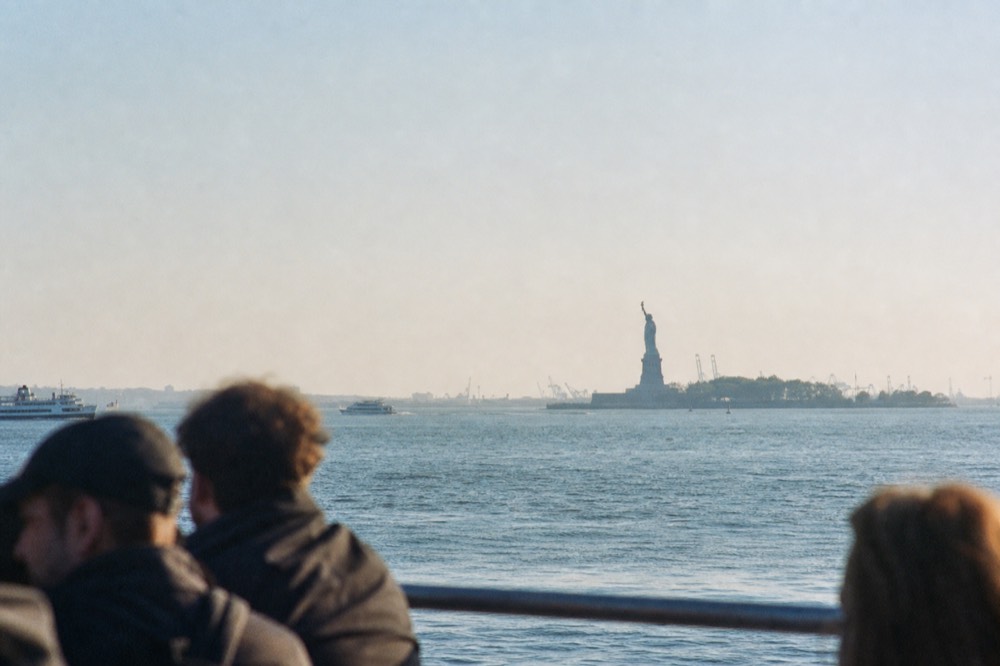
Every sailing in this lineup gets a clear view of the Statue of Liberty from the Upper Bay. Almost none of them circle it closely. A close approach around Liberty Island is what a dedicated sightseeing trip does, and dinner, brunch and jazz sailings pass at a distance on their way through the bay.
This is the single most common mismatch between expectation and product, and it is worth being blunt about. The Statue is visible, recognisably and photographably, from every route described here. It is not the centrepiece of any of them. On a three-hour dinner sailing, the bay stretch is a portion of the middle of the trip rather than a destination the boat stops at.
Why that is the case comes down to what the products are. A dinner cruise sells a meal with a view over a fixed duration and has to be back at its berth on schedule. A Liberty-focused sightseeing tour sells proximity to one object and builds its whole route around it. Those are different businesses using the same water, and the operators do not pretend otherwise on their listings.
If the Statue is genuinely the priority, the honest advice is to book a dedicated sightseeing trip for that and a harbor sailing for the meal and the skyline. If the Statue is one item on a longer list, every product here delivers it. The difference is whether you will be happy seeing it well from the bay or need it filling the frame.
| Expectation | Reality on these sailings |
|---|---|
| Clear view of the Statue | Yes, from the Upper Bay, on every route |
| Circling Liberty Island closely | No, on effectively none of them |
| Ellis Island in the same stretch | Yes, seen from the bay alongside the Statue |
| Time spent in the bay | A portion of the middle of the sailing |
| Photographable | Yes, at middle distance rather than close up |
The Jersey City departure is the interesting exception on angle rather than proximity. Leaving Liberty Landing Marina inside Liberty State Park puts the boat in the bay from the start and faces it at Lower Manhattan across open water, which is the postcard composition rather than the immersed one. It does not get closer to the Statue, but it starts on the side of the harbor where the Statue lives. The pier guide sets out what that departure involves.
Which route on this harbor is genuinely different?
One. The Classic Harbor Line brunch from Pier 62 circumnavigates the whole of Manhattan in two hours and forty five minutes, running up the East River through Hell Gate, down the Harlem River and back along the Hudson. Every other sailing in the lineup runs some version of the same southern loop.
Once you know that, the lineup reorganises itself. Nineteen products, eighteen routes that are variations on one loop, and a single sailing that does something structurally different. It carries 4.8 across 107 reviews from $139.92 with gratuity included, which makes it both the best-rated brunch and a genuinely distinct product rather than a differently-catered version of the same water.
The circumnavigation shows you parts of the city no dinner cruise reaches. Going up the East River means passing the entire eastern waterfront, then through Hell Gate, the narrow and famously tidal passage where the East River meets the Harlem River and Long Island Sound water. The Harlem River leg runs between Manhattan and the Bronx under a sequence of bridges, and the return down the Hudson delivers the west side from top to bottom.
| Leg | What it covers | Not seen on any other sailing |
|---|---|---|
| South and east from Pier 62 | The standard bay and bridges stretch | No |
| Up the East River | Eastern Manhattan waterfront, Roosevelt Island water | Yes |
| Hell Gate | The tidal passage at the top of the East River | Yes |
| Harlem River | Northern Manhattan between the island and the Bronx | Yes |
| Down the Hudson | The full west side from the north | Yes |
That is a lot of city for two hours and forty five minutes, and it is a daylight sailing, which changes the photography entirely. It is also the reason the fall foliage brunch from the same pier exists as a separate product: a Hudson run timed for mid to late October colour, at $139.92 and 4.5 across 24 reviews. If seeing something other than the standard loop is the point, the full-island brunch lists its current dates here, and the brunch lineup puts it beside the alternatives.
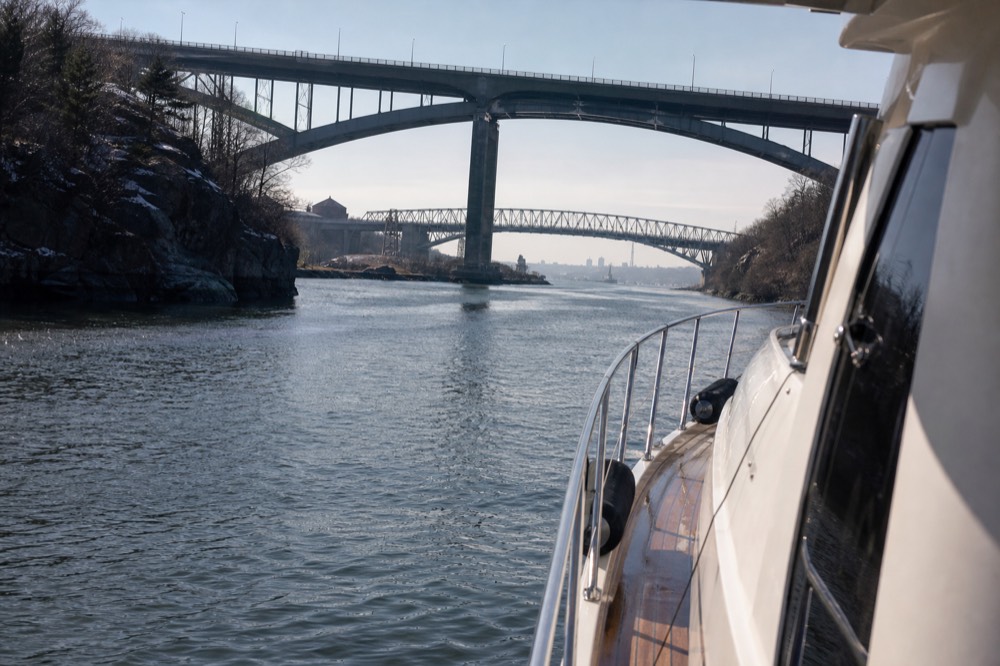
How close do you get to the East River bridges?
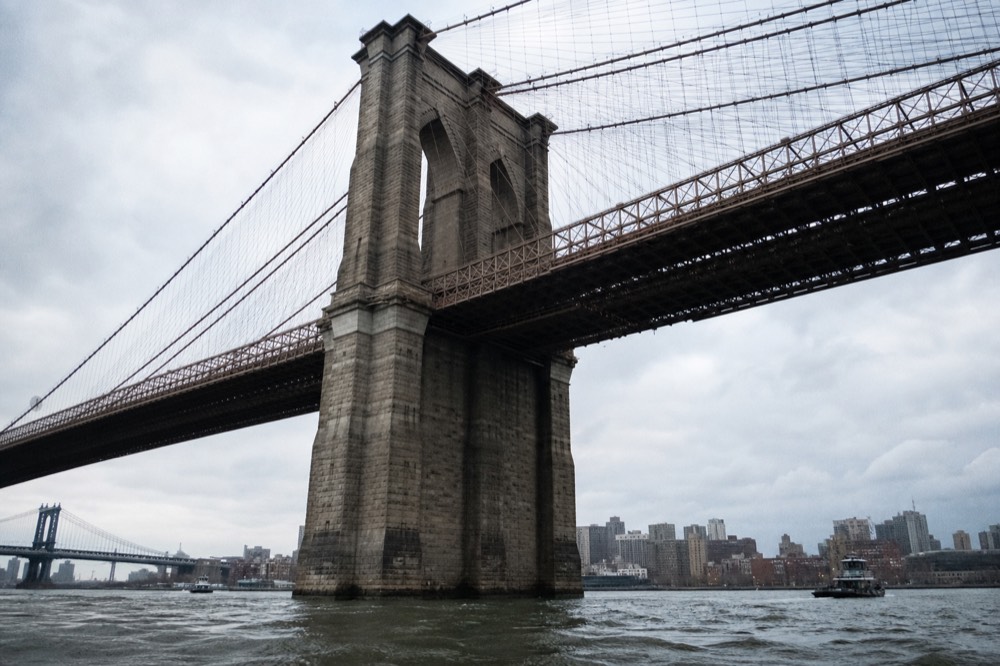
Standard loops from Chelsea run into the East River far enough to pass beneath or immediately alongside the Brooklyn Bridge and the Manhattan Bridge. Those two spans are the closest, largest structures on the entire route, and they arrive back to back, which makes that stretch the densest few minutes of the sailing.
The bridge sequence is the part of the harbor loop that consistently exceeds expectations, largely because people arrive fixated on the Statue and forget the bridges are on the itinerary at all. Where the Statue is a distant object across open water, the bridges are directly overhead or a short distance off the beam. Scale is the difference. One reads as a landmark, the other reads as architecture you are inside.
They also come in a specific order and quickly. Approaching from the bay, the Brooklyn Bridge comes first with its stone towers and fanned cables, then the Manhattan Bridge with its steel towers and different geometry, close enough behind that a single position at the rail covers both. Getting from an interior table to the deck after the first one appears usually means missing the second, which argues for being outside before the boat turns into the river.
Governors Island sits in the pivot between the bay and the river, low and green against everything else in the frame. It is not a headline attraction on any listing but it is the visual break that makes the bridge approach land properly, and on a daylight sailing it is the one genuinely pastoral thing you will see.
| Landmark | Distance from the boat | Best on |
|---|---|---|
| Brooklyn Bridge | Very close, overhead or alongside | Any loop that enters the East River |
| Manhattan Bridge | Very close, immediately after | Any loop that enters the East River |
| One World Trade | Middle distance, dominant vertical | Southbound Hudson leg |
| Empire State Building | Distance, part of the Midtown cluster | Leaving and returning to Chelsea |
| Governors Island | Middle distance, low and green | The pivot between bay and river |
| Statue of Liberty | Middle distance across open water | The Upper Bay stretch |
| Ellis Island | Middle distance, near the Statue | The Upper Bay stretch |
When does the skyline actually light up, and how do you time it?
The city lights read strongly against a darkening sky in the twenty to forty minutes after sunset, not at sunset itself. Sunset in New York swings four hours across the year, from 4:28pm in the second week of December to 8:31pm on 25 June, so the same departure time produces completely different sailings in different months.
This is the timing problem nobody solves at the booking stage. People book "a dinner cruise" and get whatever light the calendar hands them. A 6:30pm departure in late June is a fully daylit sailing that ends before the sky darkens. The identical departure in December starts after dark, with the skyline already lit and no golden hour at all.
The window everyone actually wants is the transition: the sky still holding colour while building lights come up, which is when the skyline photographs best and looks best in person. That happens shortly after sunset, which means the ideal sailing is the one that puts you in the bay or on the river during that stretch rather than tied up at Chelsea Piers.
| Month | Sunset (15th) | What a 6:30pm departure gets you |
|---|---|---|
| January | 4:53 pm | Fully dark, lit skyline throughout |
| February | 5:31 pm | Fully dark, lit skyline throughout |
| April | 7:35 pm | Daylight sailing, dusk on the return leg |
| June | 8:29 pm | Daylight throughout, no lit skyline |
| July | 8:26 pm | Daylight throughout, hazy air |
| September | 7:05 pm | Sunset mid-sailing, transition on the bay |
| October | 6:16 pm | Sunset just after departure, best of both |
September and October are the sweet spot for a standard evening sailing, and the reason is arithmetic rather than opinion: sunset falls close enough to the departure that the sailing spans daylight, transition and lit city in one trip. In June you get a beautiful daylight cruise and no lit skyline at all, which disappoints people who booked specifically for the lights. In January you get the lights from the moment you board and never see the city in daylight.
The sunset figures come from the US Naval Observatory, and the practical move is to check the date you are booking rather than assume. The sunset sailing guide works through which departures line up with golden hour month by month.
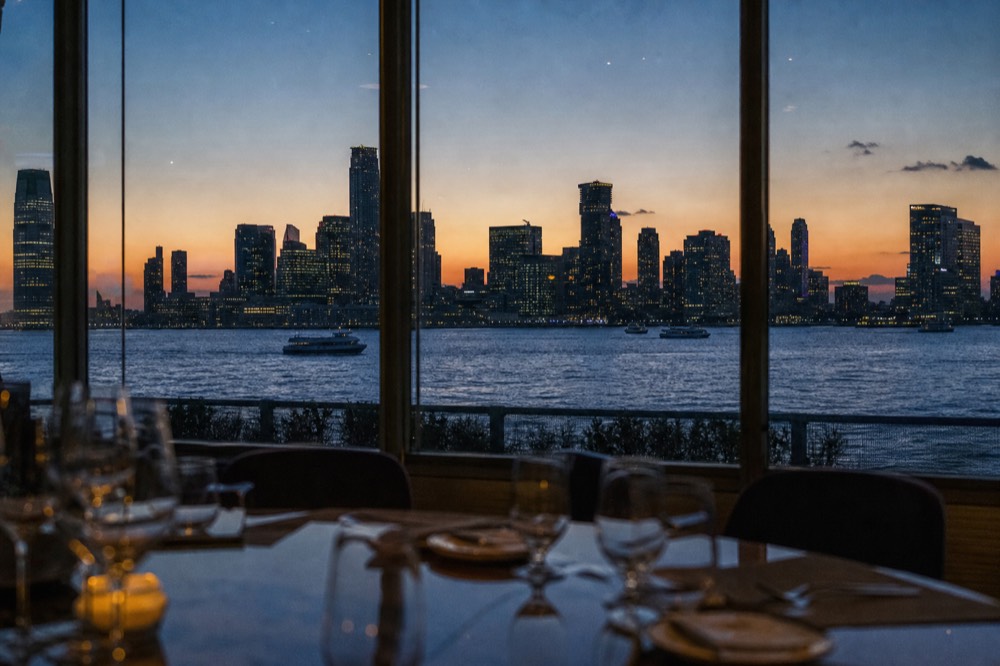
Does the season change what you can actually see?
Substantially. Summer humidity and haze soften the skyline and cut the clarity of long views. Cold, dry air in the winter months delivers the sharpest visibility of the year. Open-deck time is dependable from April through October, and mid to late October adds Hudson foliage on the river runs.
Air clarity is the variable nobody checks. A July evening on this harbor can be beautiful and still produce photographs where Lower Manhattan reads as a grey suggestion rather than a set of buildings, because humid summer air scatters light across the distance between the boat and the shore. The same view in January is knife-edged, because cold air holds far less moisture.
The catch is obvious. The months with the best visibility are the months when standing outside is least appealing, and the months when the deck is a pleasure are the months when the air is softest. That is the genuine trade-off on this harbor, and there is no sailing that resolves it.
| Season | Air clarity | Deck usable | What is on offer |
|---|---|---|---|
| December to February | Sharpest of the year | Short visits only, heated interiors | Lit skyline from the moment you board |
| March | Improving, variable | Marginal | Quiet sailings, low demand |
| April to June | Good, softening into summer | Reliably yes | Long daylight, late sunsets |
| July and August | Softest, humidity and haze | Yes, warm evenings | Full deck evenings, hazy long views |
| September | Recovering | Reliably yes | Sunset mid-sailing, good balance |
| October | Good and improving | Yes, cold at the rail | Hudson foliage mid to late month |
| November | Good | Marginal | Early sunsets, transitional |
Mid to late October is the standout on that grid, and it is why a seasonal foliage product exists at all. A Hudson run at the right week gives colour on the banks, decent air, and a sunset early enough at 6:16pm on the fifteenth that an afternoon sailing catches the transition. Demand follows, so those dates go early.
How do you get photographs worth keeping?
Get outside before the boat reaches the landmark, not after. Shoot the bridges from the open deck rather than through glass, since interior windows throw reflections from the dining room. Expect motion in low light. The transition after sunset gives the best skyline frames, and summer haze is the main thing working against you.
Three physical facts govern harbor photography and none of them are about equipment. The boat is moving, which means everything is a handheld shot from an unstable platform. The light is usually low, because the good frames happen after sunset. And a lot of these vessels are glazed, which is wonderful for dining and difficult for photographs, because a lit interior reflects off the inside of the window straight into your lens.
The glass problem has a simple answer and people rarely take it: go outside. On the fully glazed dinner boat that is a real decision, since the whole selling point is the enclosure. On the Spirit boats and the Yacht Manhattan the open deck is right there. Pressing a lens against the glass reduces reflections but does not remove the tint or the smears, and it locks you into whatever angle that window gives.
Motion is the reason evening frames come out soft. Neither you nor the boat is still, and after sunset there is not much light to work with. The practical fixes are unglamorous: brace against a rail rather than standing free, take several frames of everything, and accept that the bridges passing overhead at close range are the hardest shot on the trip because they are also the fastest.
| Photographic goal | Book this | Why |
|---|---|---|
| Sharp daylight detail | Daylight buffet lunch, $93.05 | Full sun on the standard loop, 4.5 across 210 |
| Golden hour and colour | Champagne sunset, $113.23 | Timed for the transition, 5.0 across 382 |
| Lit skyline against dark sky | Any winter evening departure | Sunset as early as 4:28pm |
| Parts of the city nobody shoots | Full-island brunch, $139.92 | Hell Gate, Harlem River, northern Hudson |
| Autumn colour on the water | Fall foliage brunch, $139.92 | Mid to late October Hudson run |
| Bridges at close range | Any loop entering the East River | Brooklyn and Manhattan back to back |
If photographs are genuinely the point rather than a bonus, the daylight sailings deserve more consideration than they get. The lunch run covers the same route as the evening buffet in full daylight, costs $26.38 less, and rates higher at 4.5 against 4.2. Everything is visible, nothing is soft from low light, and the only thing you give up is the lit city. You can check current dates on the daylight sailing and weigh that against an evening departure.
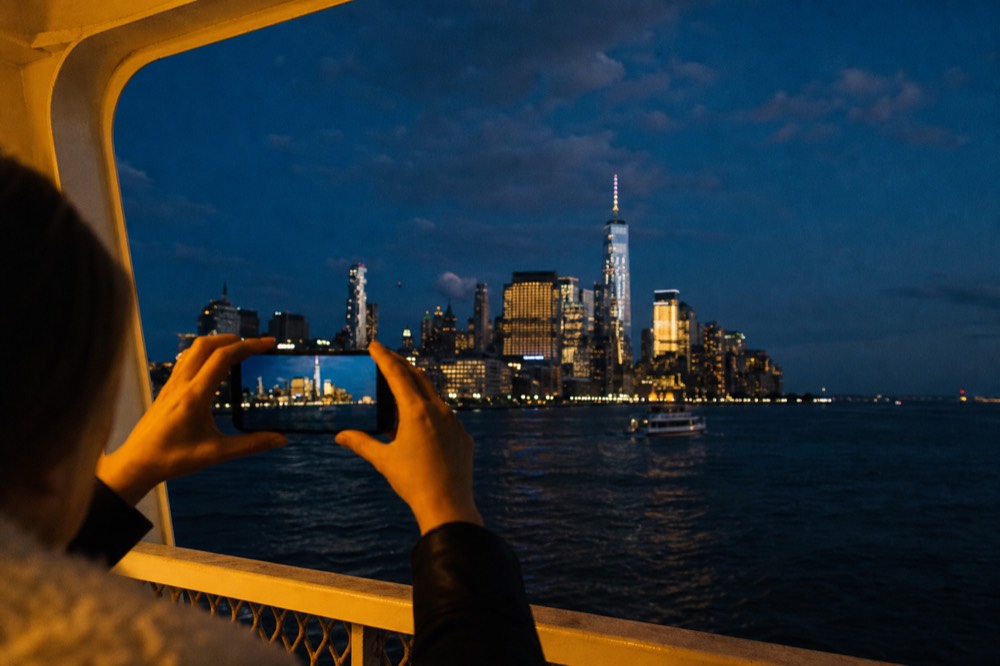
Which sailing should you book if the view is the whole point?
If the view is the priority rather than the meal, the two highest-rated products on the harbor both serve no dinner at all: a champagne sunset run at 5.0 across 382 reviews from $113.23, and an evening jazz sailing at 4.8 across 319 from $134.03. Both are ninety minutes, both leave from Pier 62, and both include gratuity.
That is an uncomfortable conclusion for a harbor built around dining, but the numbers say it clearly. The sailings that strip out the meal and concentrate on the water and the light are the ones people rate highest. Ninety minutes is enough for the loop, there is no course timing pulling you back to a table, and the smaller classic vessel puts you closer to the water than a multi-deck excursion boat does.
The sunset run in particular is engineered for the exact window described above: golden hour, champagne and light bites, no meal to interrupt it. That is why it holds a perfect score across a meaningful 382 reviews. If the plan is dinner ashore afterwards and an hour and a half on the water for the light, the champagne sunset sailing lists its current dates here, and the jazz and sunset lineup covers the alternatives.
For anyone who does want the meal, the ranking by view rather than by menu runs roughly like this. The daylight lunch shows you the most. The evening buffet on the same boat shows you the lit city with an open upper deck to watch it from. The all-glass dinner boat shows you everything through glass, which is a genuine advantage in January and a mixed one in July. And the full-island brunch shows you a completely different city. What none of them do is go around the Statue, and that is the expectation to set before you book. The full pricing comparison and the buffet lineup both take the decision further.
Do these cruises go around the Statue of Liberty?
No. Every sailing in this lineup passes through the Upper Bay and gives a clear view of the Statue and of Ellis Island, but a close circle around Liberty Island is what dedicated sightseeing trips do. On a dinner, brunch or jazz sailing the Statue is a middle-distance landmark seen once during the bay stretch, not the centre of the route.
Which cruise sees the most of New York?
The Classic Harbor Line brunch that circumnavigates Manhattan, at two hours forty five minutes from Pier 62. It runs up the East River through Hell Gate, down the Harlem River between Manhattan and the Bronx, and back along the full length of the Hudson. Nothing else on this harbor covers the northern half of the island.
Is a daytime cruise worse for views than an evening one?
Different, not worse. Daylight shows you detail, colour and the shape of the city, and it produces sharper photographs. Evening gives you the lit skyline, which is the image most people have in mind. The daylight buffet lunch runs the same route as the evening sailing for $26.38 less and rates higher, at 4.5 against 4.2.
When is the skyline best lit?
In the twenty to forty minutes after sunset, when building lights are on and the sky still holds colour. Because sunset moves from 4:28pm in December to 8:31pm in late June, the departure that catches that window changes completely by season. September and October line up best with a standard evening departure.
Does the weather ruin the view?
Rain and low cloud will flatten it, but the more consistent factor is humidity. Summer haze softens long views across the harbor, while cold dry air from December through February gives the sharpest visibility of the year. The trade is that the clearest months are also the ones where you will not want to spend long at the rail.
Which side of the boat should I sit on?
Ask the crew when you board rather than guessing, since the loop turns and both sides get their share. What matters more than the side is being outside for the two stretches that count: the Upper Bay for the Statue and the East River approach for the bridges. More route and timing detail sits across the guides index.